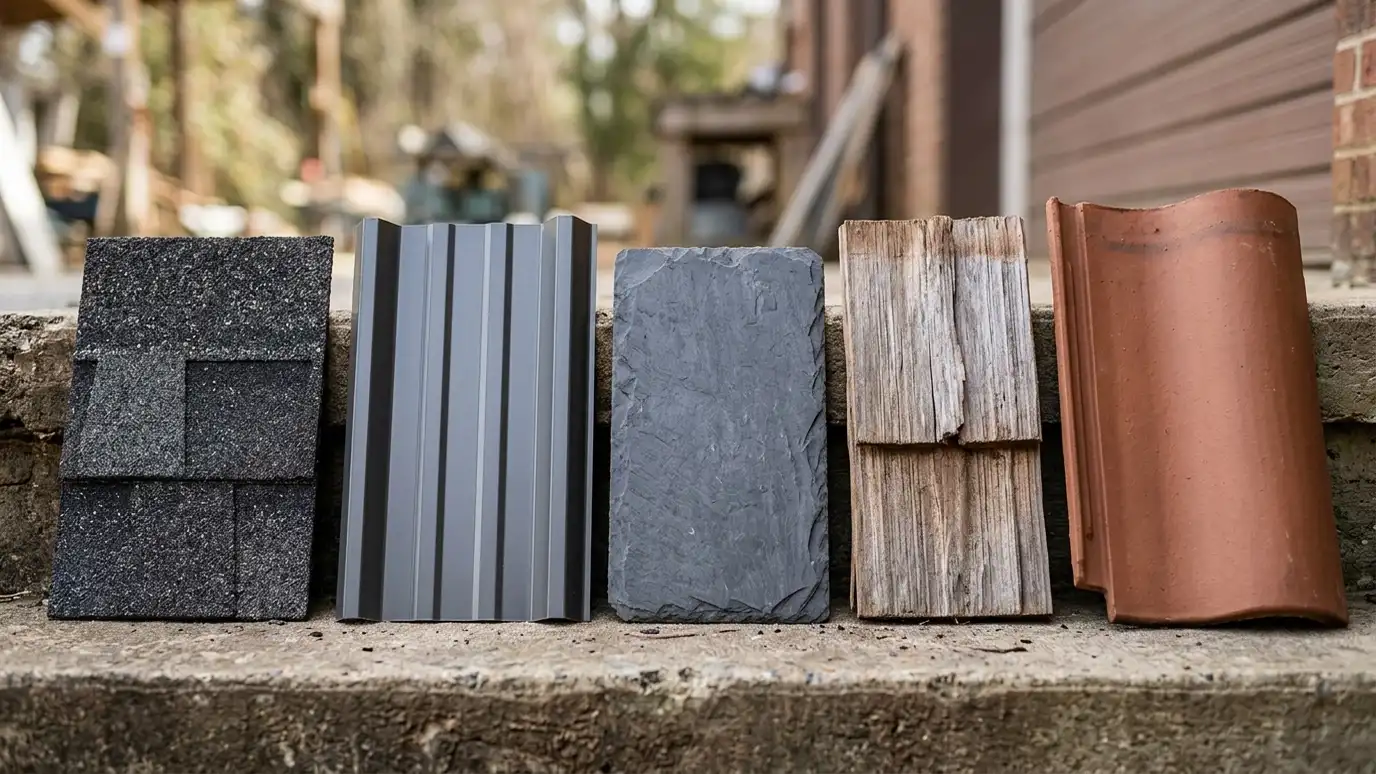
Asphalt shingles
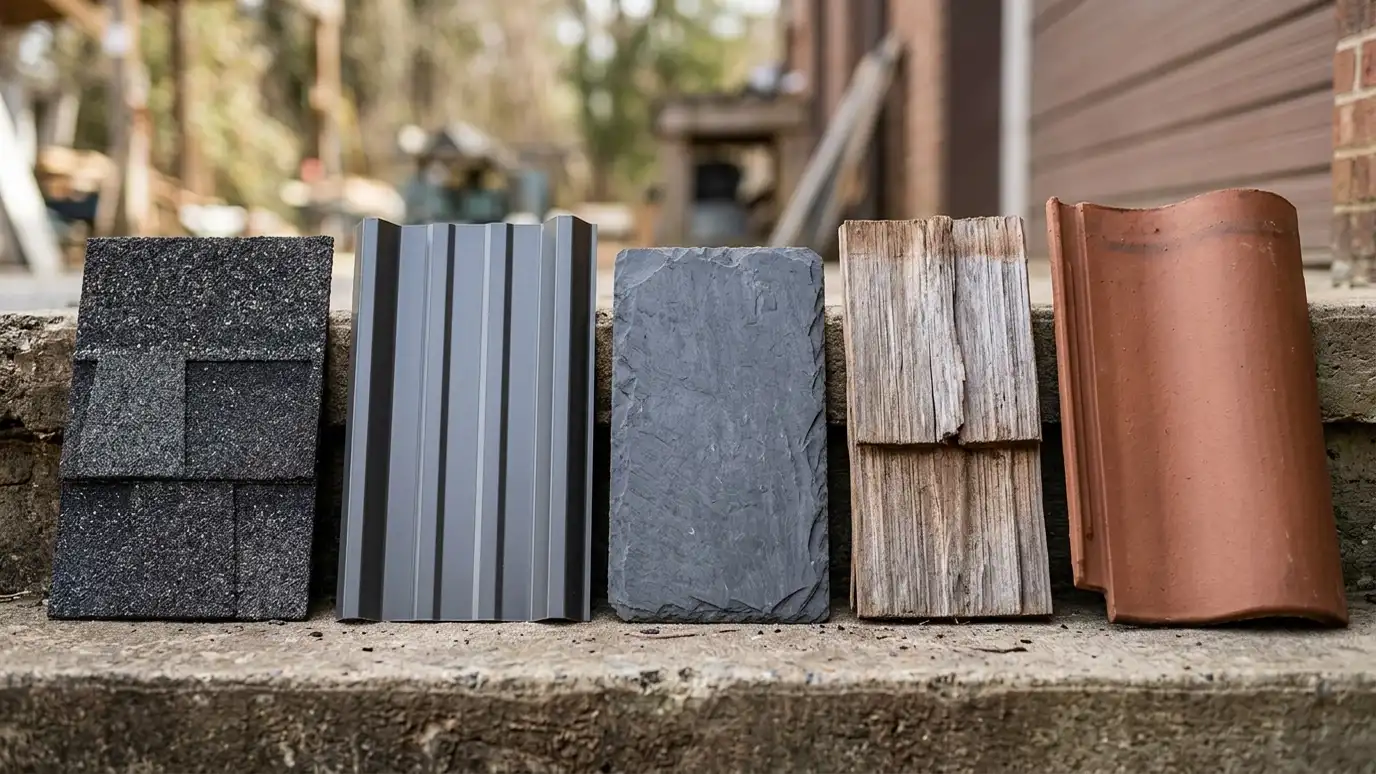
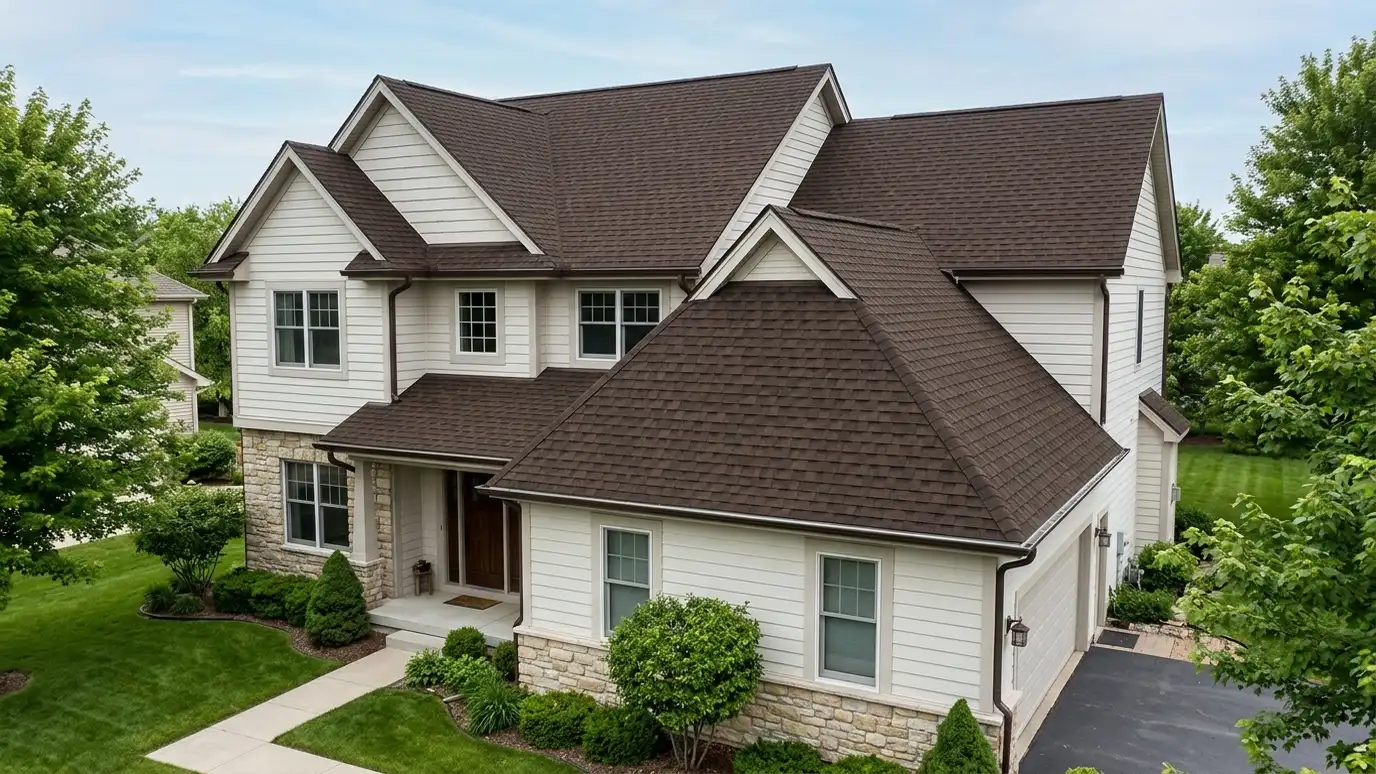
The most common roof in Middle Tennessee. Three-tab and architectural lines come in many colors, with premium designer lines at the high end.
They install quickly and repair easily.
Life depends on product, ventilation and conditions.
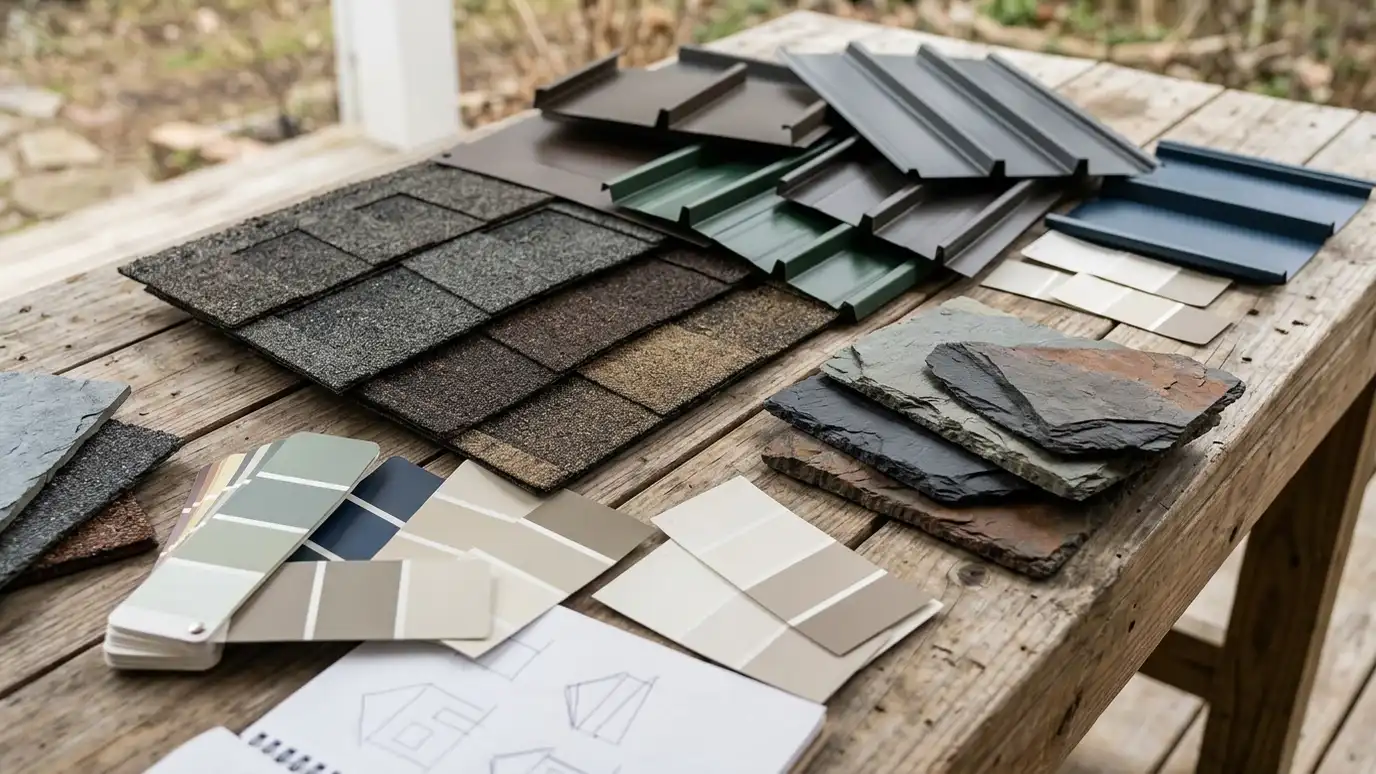
Ask to see a full shingle, not just a corner sample, and hold it in sun and shade. Colors shift, and a full piece shows thickness and texture.
Metal roofing
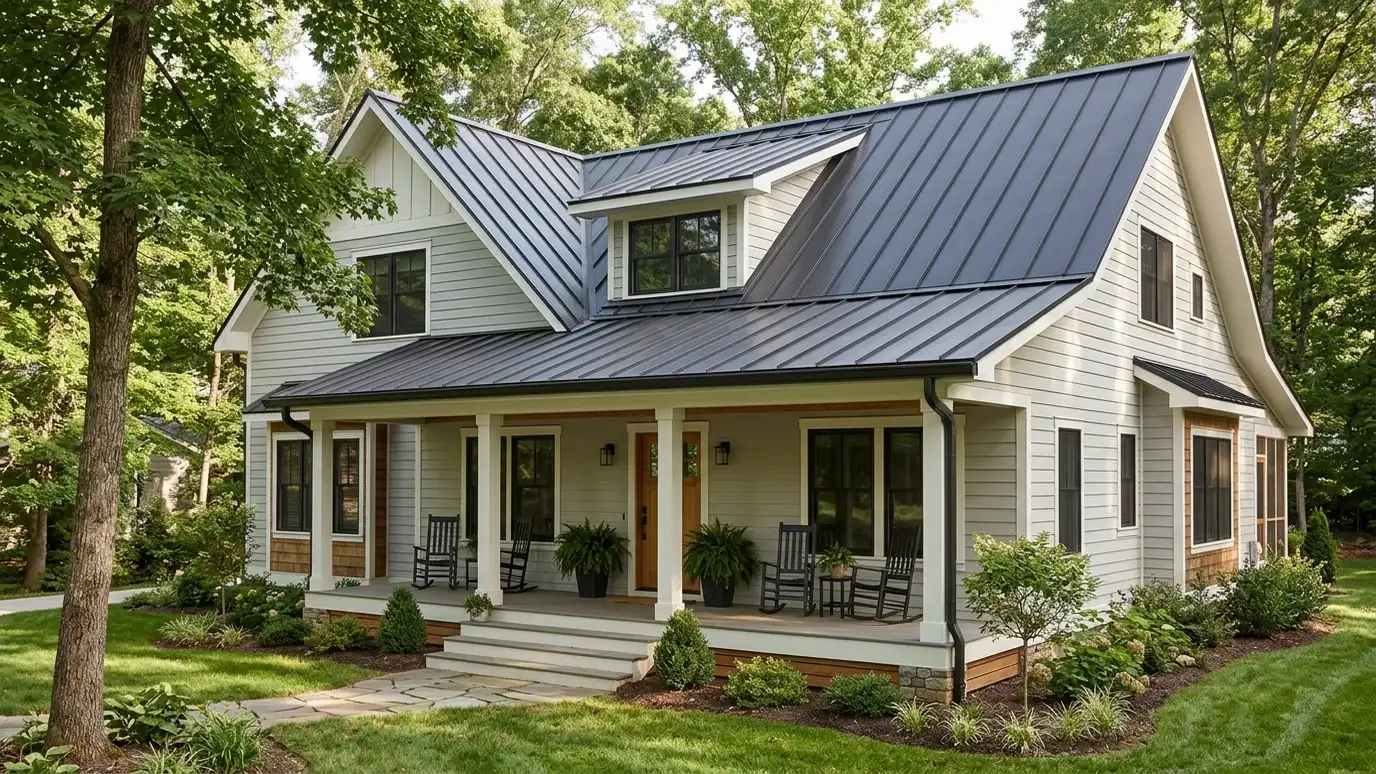
Standing seam, ribbed panels and stone-coated steel shed water and resist fire. Details and fasteners matter.
Metal can be modern, farmhouse or traditional in look.
Thin panels can dent in hail.
If you are considering metal, ask about gauge, finish and how the roof handles hail, noise and snow. Samples of the actual product are better than pictures.
Slate and tile
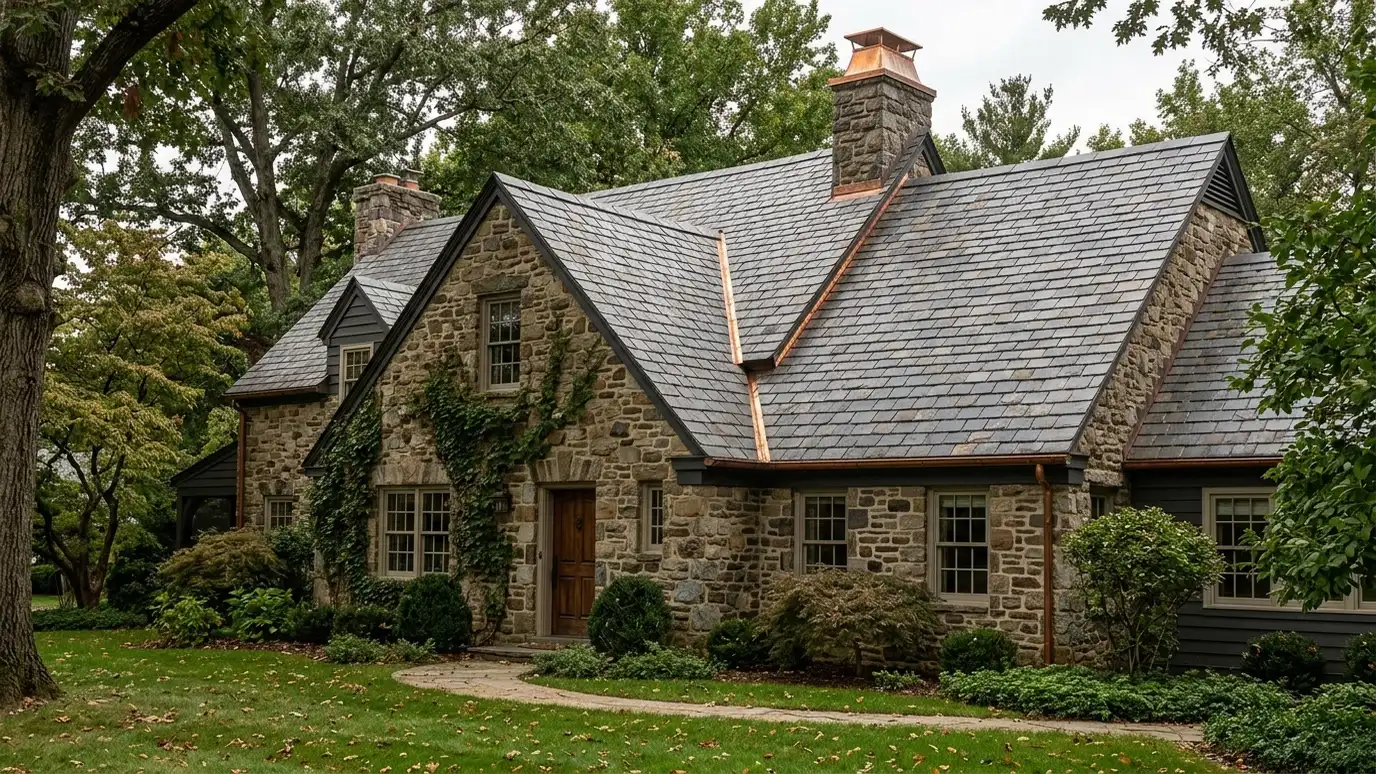
Natural slate and clay or concrete tile can last very long, and they are heavy and need strong framing and skilled installers.
Flashings and underlayment may need renewal sooner than the roofing.
These materials suit special homes.
Slate and tile owners should ask who will repair the roof in the future and how replacement pieces are sourced. Long-lived materials depend on skilled maintenance.
Synthetic and composite
Synthetic slate and shake imitate natural materials with less weight and often easier care.
Look at blends, ratings and manufacturer details.
They suit owners who love the look but not the weight.
Look at photos of synthetic products on homes like yours. Color blends can look very different on a full roof than in a small sample.
Cedar shake
Warm natural look that ages to silver. Needs ventilation, maintenance and attention to local rules.
Alternatives exist if upkeep is a concern.
Cedar suits cottages and craftsman homes.
If you like cedar, ask about treatments, cleaning and any neighborhood rules. Some owners choose a cedar-look composite after talking it through.
How to choose
Consider roof pitch, structure, neighborhood rules, noise, hail and wind exposure, budget and how long you will stay.
Look at real samples against your home in daylight.
Our material quiz can help you narrow choices.
Narrow your choices to two, then compare them on your house with samples and a sketch or visualization. A short list makes the final decision easier.
Match the material to your roof shape, structure and goals, and judge samples in your own light.